🧬 Introduction
Anti-Müllerian Hormone (AMH) is one of the most important markers used to evaluate a woman’s ovarian reserve—or how many eggs she likely has left.
It’s a simple blood test, but the insight it offers is powerful—especially if you’re planning for pregnancy now or in the future.
🔍 What Does AMH Measure?
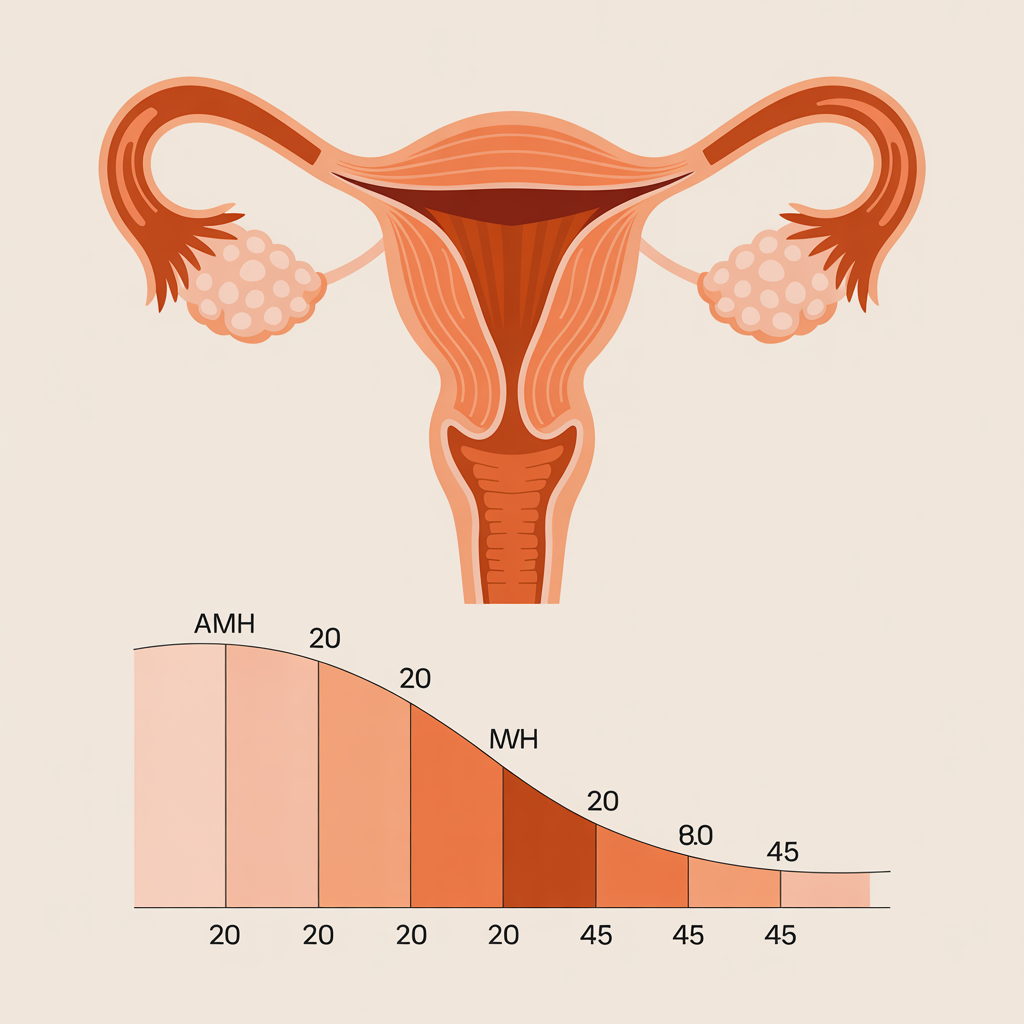
AMH is produced by the small follicles in your ovaries.
- Higher AMH = More follicles (and potentially more eggs)
- Lower AMH = Fewer follicles, often signaling diminished ovarian reserve
Low AMH can be age-related or linked to conditions like premature ovarian insufficiency.
🩸 How Is AMH Tested?
Unlike many hormone tests, AMH can be tested at any point in your menstrual cycle.
- It requires a standard blood sample
- Results are typically available within a few days
📊 AMH Levels by Age (Typical Ranges)
| Age Range | AMH Level (ng/mL) |
|---|---|
| 20–29 | 3.0 – 6.8 |
| 30–34 | 2.5 – 5.4 |
| 35–39 | 1.0 – 3.0 |
| 40–44 | 0.3 – 2.1 |
| 45+ | Often below 0.3 |
Note: Values may vary slightly depending on the lab. Your fertility specialist will interpret results alongside your full clinical picture.
📉 What Low AMH Means
A low AMH result doesn’t mean pregnancy is impossible, but it may suggest:
- Fewer eggs remain
- You might not respond well to fertility medications
- Your reproductive window may be shorter
This can influence decisions about timing or treatment approach.
📈 What High AMH Means
High AMH often suggests a strong ovarian reserve.
But very high levels may indicate Polycystic Ovary Syndrome (PCOS)—a hormonal condition that can affect ovulation.
🧪 How AMH Guides Fertility Treatment
Fertility specialists use AMH to:
- Tailor medication doses in IVF or egg retrieval
- Suggest egg freezing at a younger age for those with low reserve
- Predict ovarian response to stimulation drugs
It’s a cornerstone test in fertility planning.

🌼 Final Thoughts
Knowing your AMH is empowering.
It won’t predict exactly when or if you’ll conceive—but it provides valuable clarity that helps you plan wisely and confidently.
Always review your results with a fertility expert who can guide you based on your unique story.