🧬 Introduction
More women are exploring egg freezing as a way to preserve their fertility for the future. Whether you’re focused on your career, waiting for the right partner, or managing a medical condition, this option offers reproductive flexibility—but is it right for everyone?

❄️ What Is Egg Freezing?
Egg freezing, also called oocyte cryopreservation, involves retrieving mature eggs from the ovaries, freezing them, and storing them for later use.
These eggs can be thawed, fertilized, and transferred into the uterus in a future IVF cycle.
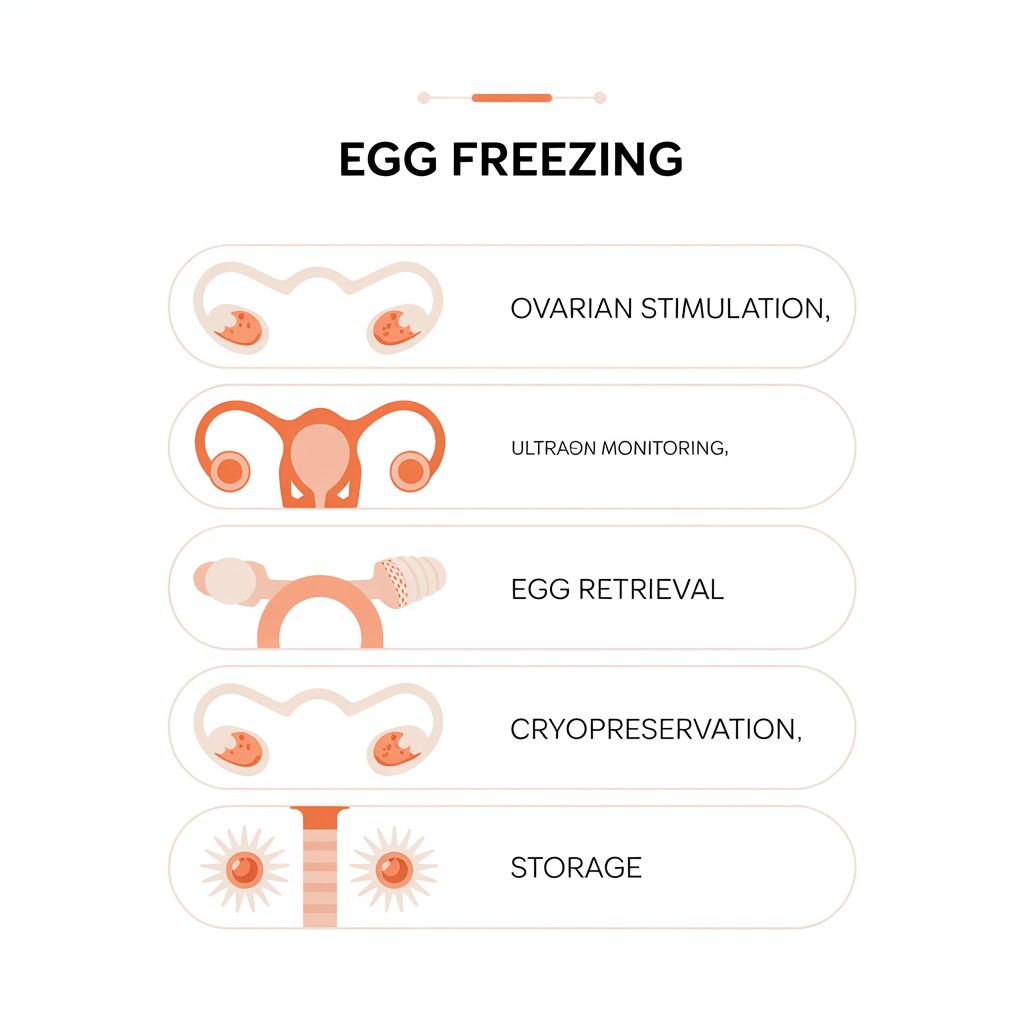
🩺 Step-by-Step: The Egg Freezing Process
- Ovarian Stimulation
Hormone injections for 10–12 days to stimulate multiple egg follicles. - Monitoring
Regular ultrasounds and blood tests track progress and hormone levels. - Egg Retrieval
A quick outpatient procedure under light sedation to collect mature eggs. - Freezing (Vitrification)
Viable eggs are flash-frozen to prevent ice crystal damage, preserving quality.
👩⚕️ Who Should Consider Egg Freezing?
Egg freezing may be a good option for:
- Women aged 30–38 who want to delay childbearing
- Those with a family history of early menopause
- Patients undergoing chemotherapy or radiation
- Women in high-risk or demanding careers
- Individuals who are not yet ready but want to preserve their options
📊 Success Rates and Realistic Expectations
Egg quality—and thus freezing success—is age-dependent:
- Under 35: ~1–2 live births per 10 frozen eggs
- 35–38: ~1 live birth per 10–15 eggs
- Over 38: Lower success, and more eggs are typically needed
The younger the eggs, the better their quality and potential for future success.
✅ Pros of Egg Freezing
- Greater reproductive freedom
- Reduces pressure to rush into parenthood
- May help avoid the use of donor eggs later
⚠️ Cons and Considerations
- Costly: $5,000–$8,000 per cycle, excluding medication and storage
- No guarantees: Freezing eggs doesn’t guarantee a baby
- Involves injections, monitoring, and minor surgery
🧠 Expert Insight
“Freezing your eggs doesn’t guarantee a baby, but it gives you options that may not be available later,”
says Dr. Nana Owusu, fertility specialist.
“The earlier you consider it, the better the outcome tends to be.”
🌱 Final Thoughts
Egg freezing isn’t for everyone—but it can be a powerful tool in your fertility planning toolbox.
Talk to a fertility specialist about:
- Your AMH levels (ovarian reserve)
- Life goals and medical history
- Whether freezing fits into your family planning journey
Sometimes, preserving the possibility of motherhood is the greatest gift you can give your future self.